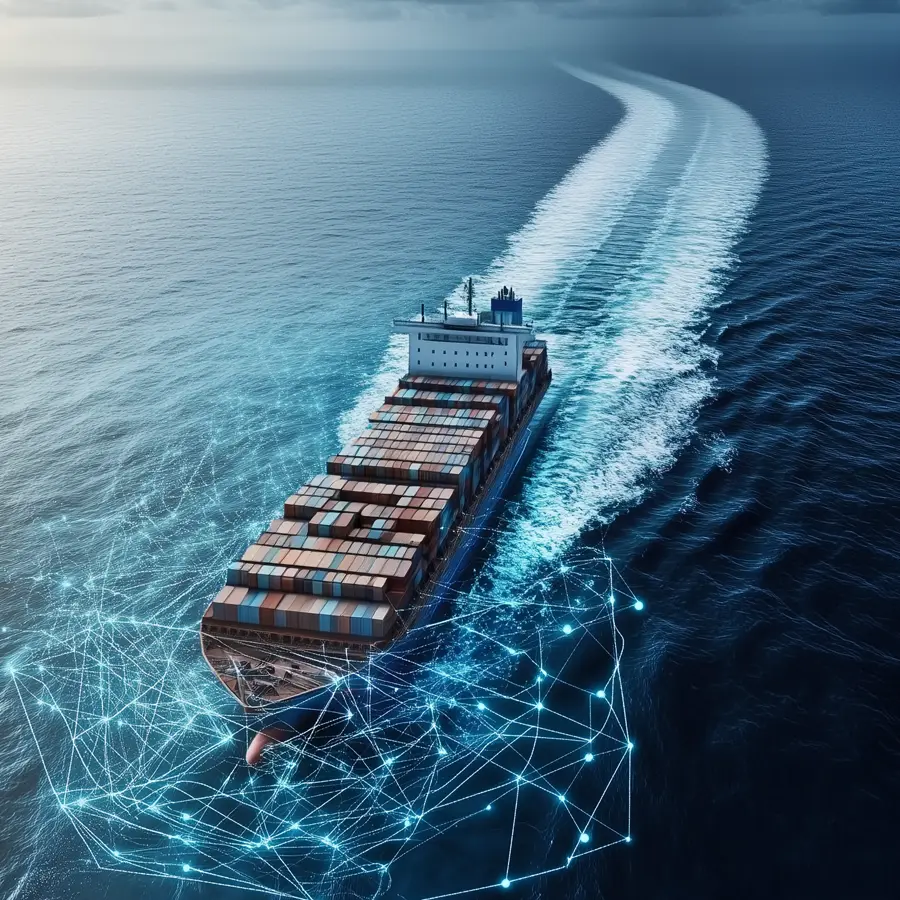
Multi-Objective Voyage Optimisation: Revolutionising Weather Routing
Insight
- Nikki
In the vast and dynamic realm of maritime navigation, the shortest route may not always be the best route. Hence, the maritime sector has long grappled with the challenge of optimising voyages not just for time, but also for safety. Traditional methods focused on avoiding bad weather to prevent ship damage and cargo loss. However, recent shifts in industry priorities have emphasised the need to optimise for fuel consumption and carbon emissions as well. Recognised by the International Maritime Organization (IMO) as a crucial tool in aiding ship owners toward achieving carbon neutrality by 2050.
What is Weather Routing?
Weather routing in the maritime industry is a sophisticated process that utilises weather data to determine the most efficient routes for ships. While the concept may sound straightforward, the implementation involves complex calculations and analyses. The chosen route must balance various factors, such as current weather forecasts, ship characteristics, and specific cargo requirements. The overarching goal is to minimise operating costs, reduce fuel consumption, and mitigate the risks associated with difficult passage conditions. Despite the proven potential of weather routing to save between 3 – 5% on fuel consumption, there remains a degree of market scepticism, underscoring the need for more robust and convincing technological solutions.
“Traditional Voyage Optimisation is proven to save 3-5% on fuel consumption”
What is the Difference between Weather Routing & Voyage Optimisation?
Traditionally, weather routing has been synonymous with voyage optimisation, though the latter employs more advanced algorithms, marking a significant evolution from conventional methods. One of the most transformative advancements in voyage optimisation is the adoption of Genetic Algorithms (GAs) for route optimisation. Unlike traditional optimisation methods that typically hone in on a single best solution based on one criterion, Multi-Objective Genetic Algorithms (MOGA) excel in situations where several outcomes must be balanced simultaneously. This approach, also known as multi-objective voyage optimisation, provides a spectrum of optimal solutions, each balancing factors like cost, efficiency, and safety, allowing maritime strategists to select the best fit for their specific operational constraints and goals. MOGAs operate on the principles of natural selection, infinitely optimising until no better solution is found.
“Multi-Objective Voyage Optimisation saves up to 5% on fuel consumption in comparison to traditional weather routing solutions”
In practical terms, MOGAs can process numerous potential routes, continuously refining them to account for changing conditions such as weather dynamics and sea states. This capability allows for a nuanced consideration of all influencing factors, thereby facilitating optimal decision-making that enhances efficiency and safety. The integration of GAs in maritime route planning represents a significant leap forward, shifting from static, traditional navigational methods to dynamic, algorithm-driven approaches.
Proseadure’s multi-objective voyage optimisation is unique in the market. With over ten years of development, our model has been proven to consistently outperform traditional methods, delivering an additional 5% in fuel reductions.
What are the Benefits of Multi-Objective Voyage Optimisation?
- Efficiency and Cost Savings: The application of multi-objective voyage optimisation in maritime route optimisation translates into direct and substantial benefits in terms of efficiency and cost reduction. By intelligently designing routes that minimise fuel consumption and maximise the use of favourable currents and winds, MOGAs significantly lower operational expenses. These savings are crucial not only for boosting profitability but also for reducing the environmental impact of shipping operations, aligning with global sustainability goals.
- Enhanced Safety and Reliability: Safety in maritime navigation is paramount, therefore our algorithm is integrated with best-in class weather forecasts, enabling more accurate and foresighted planning. The use of >100 Low Earth Orbit (LEO) satellites that generates 10.000 seastate measure points per day, equipped with advanced AI capabilities, provides weather forecasts up to 15 days in advance. In comparison, other weather providers which uses weather balloons only generate 1.800 measure points per day and are not able to measure seastate conditions far from the land. The use of accurate weather data together with multi-objective voyage optimisation allows for adjustments to routes based on accurate weather forecasts, thereby enhancing the reliability and safety of maritime operations. The ability to better foresee and circumvent potentially hazardous conditions can prevent accidents and ensure smoother voyages.
- Improved Adaptability and Flexibility: One of the standout features of multi-objective voyage optimisation in maritime route planning is their modular flexibility. This characteristic allows for easy integration of additional parameters or constraints into the routing process, making MOGAs extremely adaptable to specific needs or changes in operational strategies. Whether it’s adjusting for new environmental regulations, accommodating special cargo requirements, or incorporating last-minute changes in port availability, multi-objective voyage optimisation can seamlessly integrate these factors without compromising on efficiency or outcomes. This modular approach ensures that maritime operators can maintain a competitive edge by quickly adapting to new conditions or regulations, highlighting the practical versatility and customisability of Proseadure’s multi-objective voyage optimisation module in the ever-evolving maritime industry.
Future Trends and Developments in Voyage Optimisation
- AI and Machine Learning: Recent developments in AI and machine learning are significantly enhancing traditional voyage optimisation algorithms. AI excels in real-time data processing and decision-making, allowing for dynamic adjustments to routes based on current maritime conditions. Meanwhile, Machine learning leverages historical voyage data to refine and optimise these algorithms continuously. Nevertheless, traditional algorithms that employ AI and machine learning to enhance their models typically face limitations in terms of optimisation flexibility. These methods often depend heavily on historical data to inform their predictions and decisions. Interestingly, multi-objective genetic algorithms uses a form of AI, that are particularly effective for their robust search capabilities and do not need to rely on historical data to the extent that algorithms based on machine learning does. This makes GAs highly adaptable and quick to deploy, as they can generate optimal solutions without the need for extensive prior data analysis.
- Digital Twins: A promising direction in maritime technology is the use of digital twins, which involves creating detailed digital replicas of physical ships to simulate and analyse their behaviour under various conditions. By integrating voyage optimisation models with digital twins, companies can achieve unprecedented levels of accuracy in route planning, tailored specifically to the characteristics of each vessel. Our model utilises generic ship models to optimise voyage solutions based on specific ship conditions, such as propeller and hull efficiency. Additionally, it can be seamlessly integrated with our customer’s custom ship models to deliver unparalleled optimisation solutions.
- Other Technological Advancements: Looking forward, the maritime industry may also explore the application of emerging technologies such as quantum computing, which could dramatically enhance the speed and complexity of calculations for route optimisation. As computational capabilities expand, the potential to optimise maritime navigation for even the most challenging conditions becomes a tangible reality.
How Can Proseadure Help with Voyage Optimisation?
The integration of multi-objective voyage optimisation that uses genetic algorithms into weather routing is more than just an enhancement: it’s a transformative shift that promises to redefine maritime navigation. With benefits ranging from increased efficiency and cost savings to improved safety and reliability, MOGAs represent the cutting edge of maritime technology. As the industry progresses towards greater technological integration and sustainability, the continued adoption and development of such advanced algorithms will be key. Proseadure stands at the forefront of this innovation with our multi-objective voyage optimisation module developed for over a decade, ready to be deployed in an instant. Interested in learning more or need assistance with voyage optimisation? Book a demo with our experts and see how Proseadure can benefit your business.For further insights and a detailed analysis of the benefits of our solutions, check out the latest Insights.
Click here to learn more about Proseadure’s all-in one compliancy software
Newsletter
Subscribe to our newsletter for the latest news and insights
Latest News



Learn how Proseadure can steering your company towards sustainability
Latest news
Steering Towards Sustainability: Innovating Vessel Software for a Greener Tomorrow
- Nikki
FuelEU Maritime is the latest regulation soon to be adopted in the industry. Here’s a comprehensive guide.
- Nikki
Accurate maritime weather data plays a pivotal role in ensuring the safety, efficiency and profitability of maritime operation